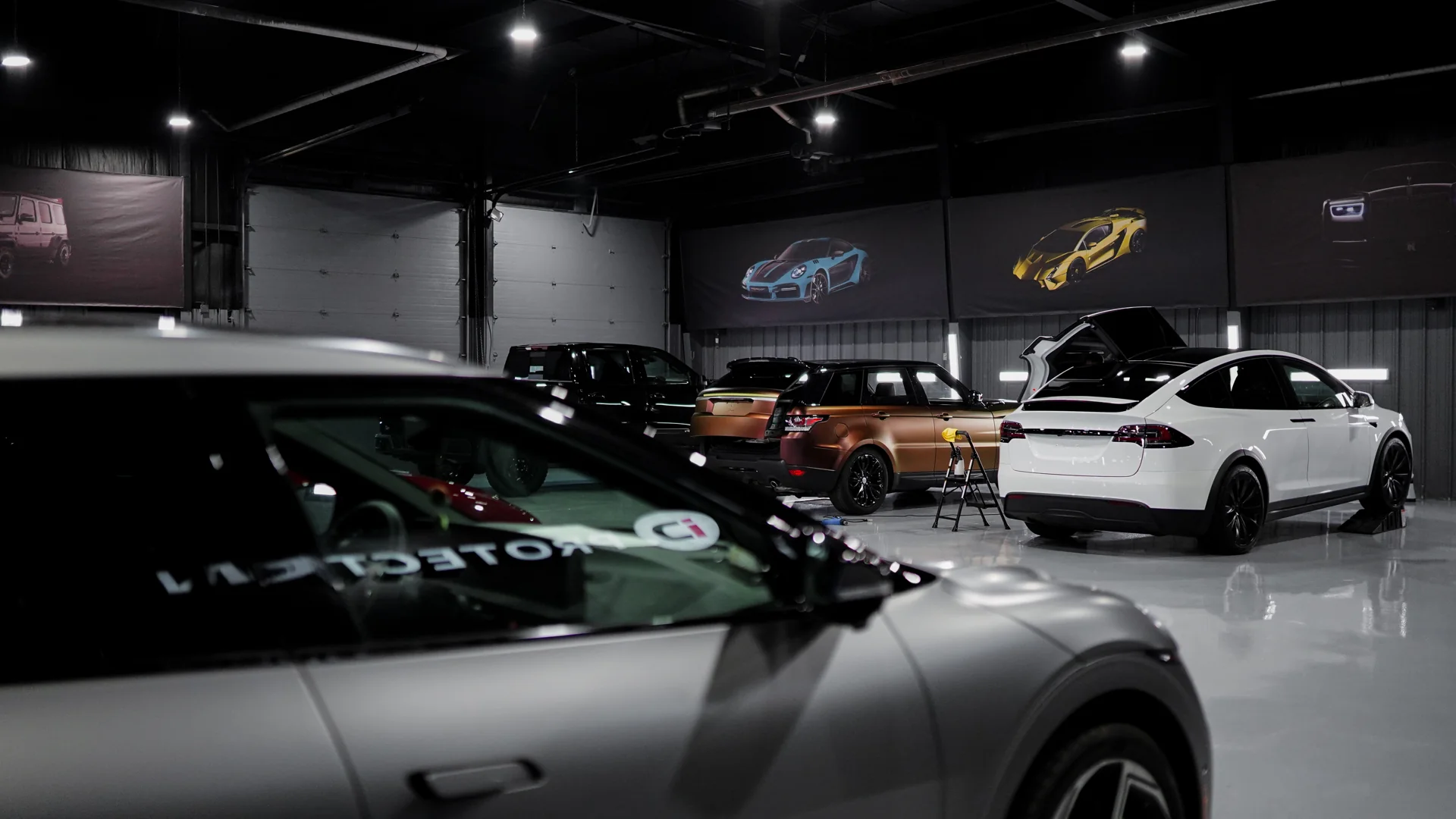
PPF Training Toronto: Learn Paint Protection Film From Working Installers
Hands-on PPF training in Toronto, taught in a working studio by the people who install film on customer cars every day. You learn vehicle acceptance and inspection, prep, film handling, pre-cut and hand-cut application, edge wrapping and the final handover. Then you install full applications yourself, with an installer beside you.
Why Choose Our PPF Training in Toronto
Working instructors
Over ten years installing paint protection film, with a current daily workload of Porsches, Teslas, Mercedes and everyday commuter cars. You are taught what works on this week's jobs, not what worked five years ago.
All three methods
Pre-cut, hand-cut and the combined method we actually sell most. Plenty of courses teach pre-cut only. A pre-cut-only installer is stuck the moment a customer asks why they can see the film line on the fender.
Direct access after the course
Your support chat goes to the installers, not a help desk. Send a photo of a lifting edge or a stretched corner and you get an answer from someone who has fixed that exact problem.
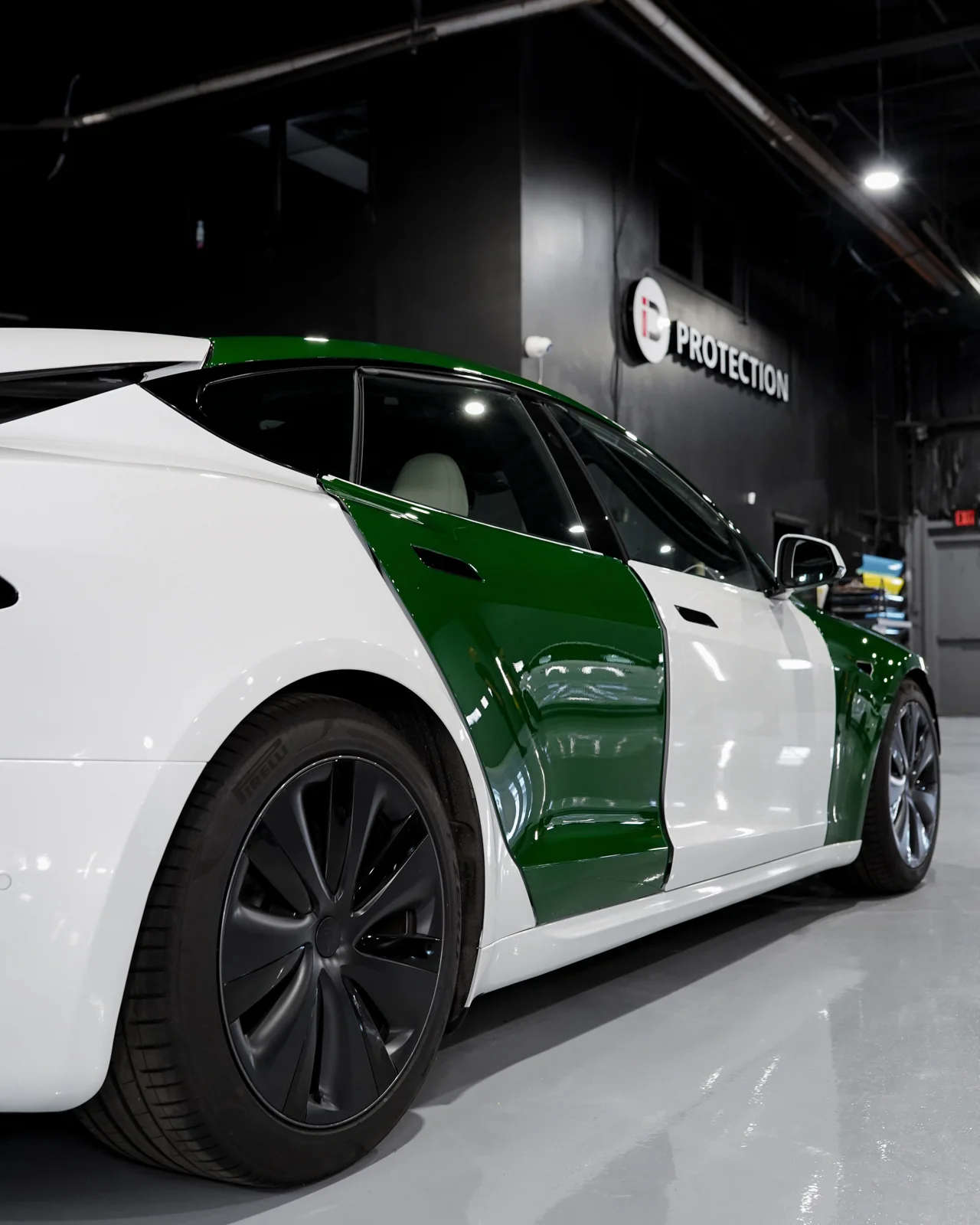
Training That Happens on Real Cars, Not on a Practice Hood
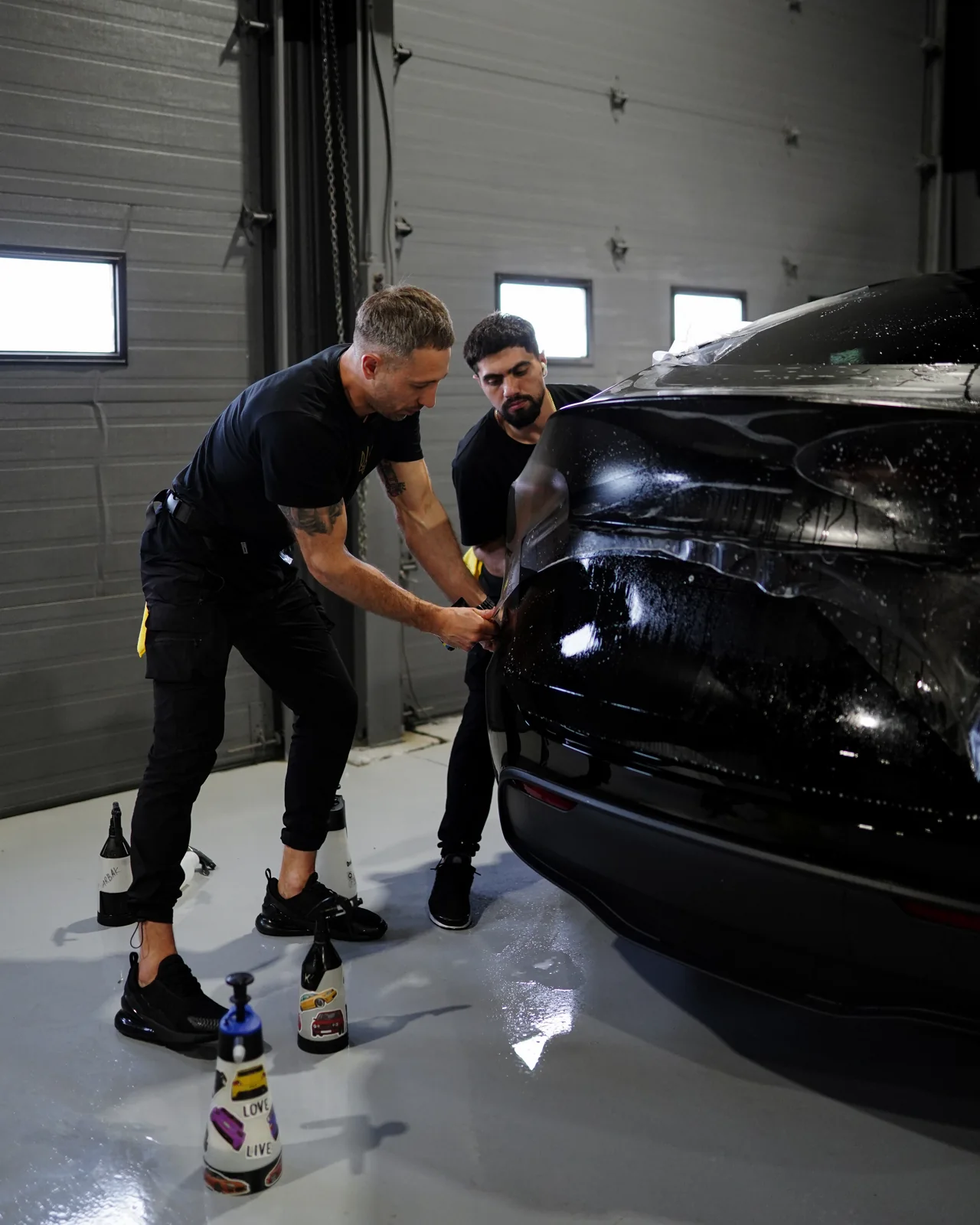
Most people who search for paint protection film training in Toronto have already watched the videos. What they have not done is tuck film inside a bumper gap on a car that a customer is picking up at five o'clock. That is what this course is built around.
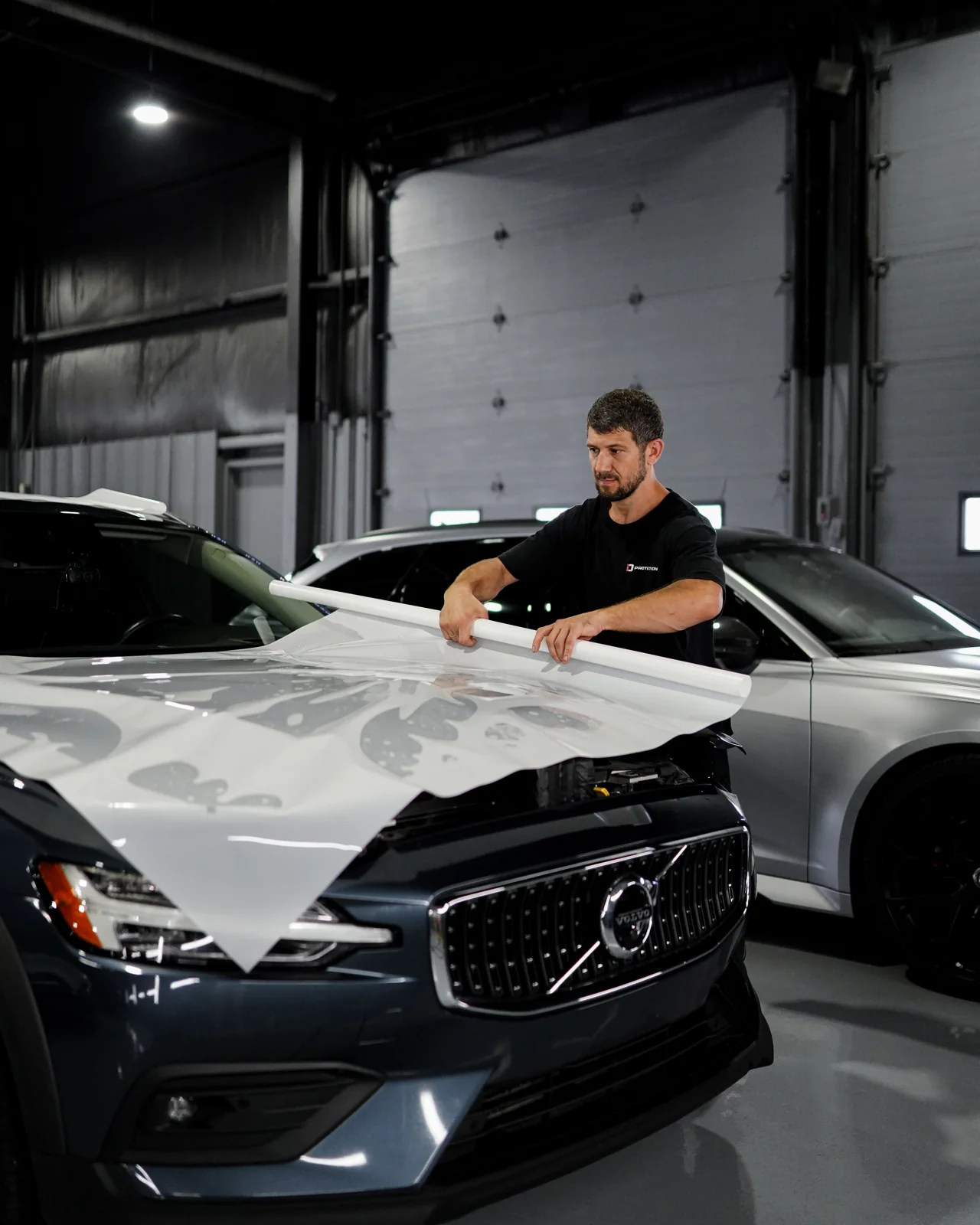
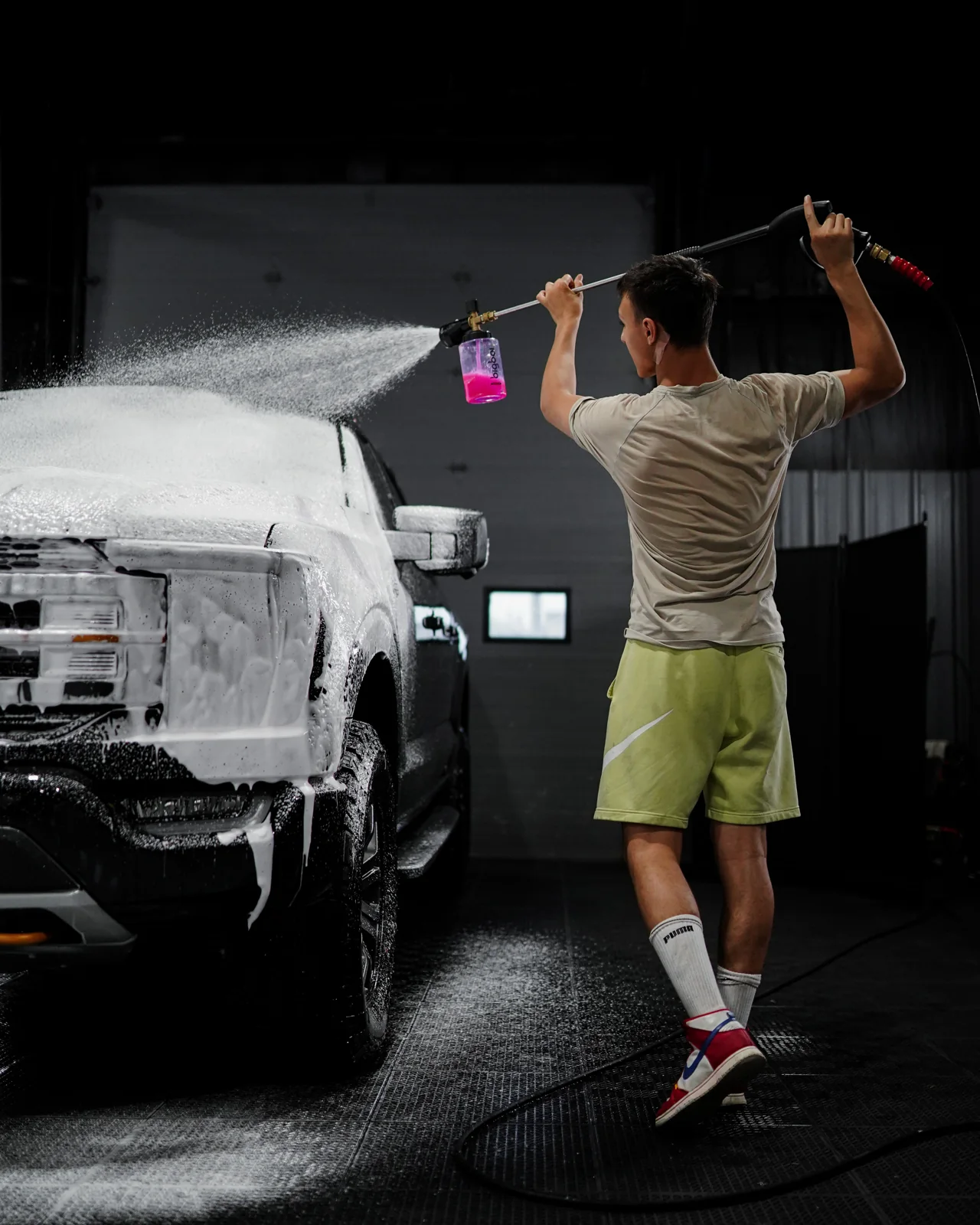
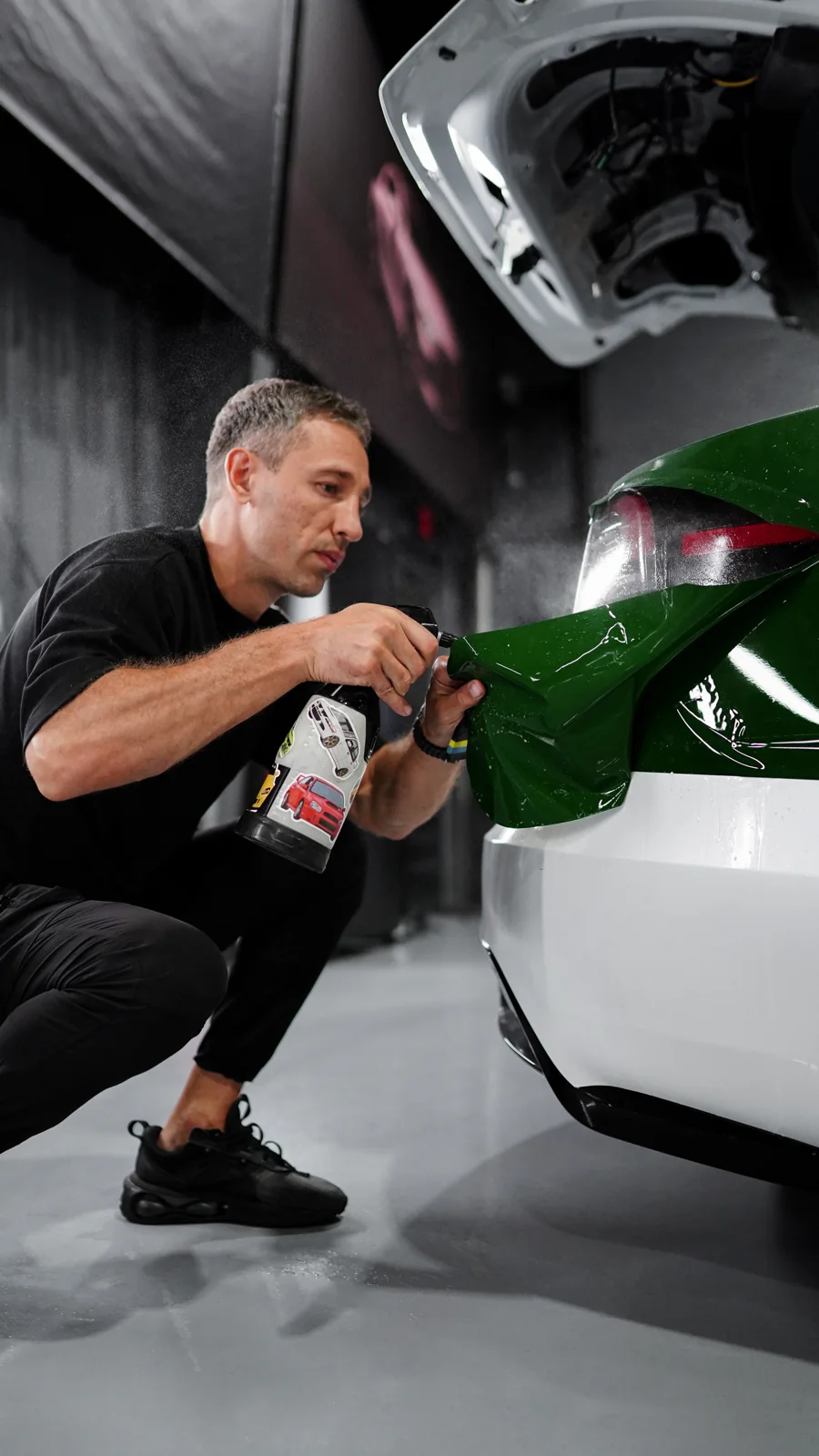
Our studio runs clear PPF, colored PPF, tint and wrap jobs through the bays all week. Trainees work in those bays. The cars are real, the deadlines are real, and the instructor is the same person who quotes the customer, installs the film and hands the keys back. There is no separate classroom crew. You learn from installers because installers are the only people here.
What You Will Learn in the Course
Our PPF course in Toronto follows the same order a car moves through the studio. Each step is practised on a vehicle, not on a sample panel.
-
01
Vehicle inspection and acceptance
How to walk around a car with the customer, record existing chips, scratches and paint repairs, and agree on what the film will and will not fix. This step prevents most disputes.
-
02
Vehicle preparation
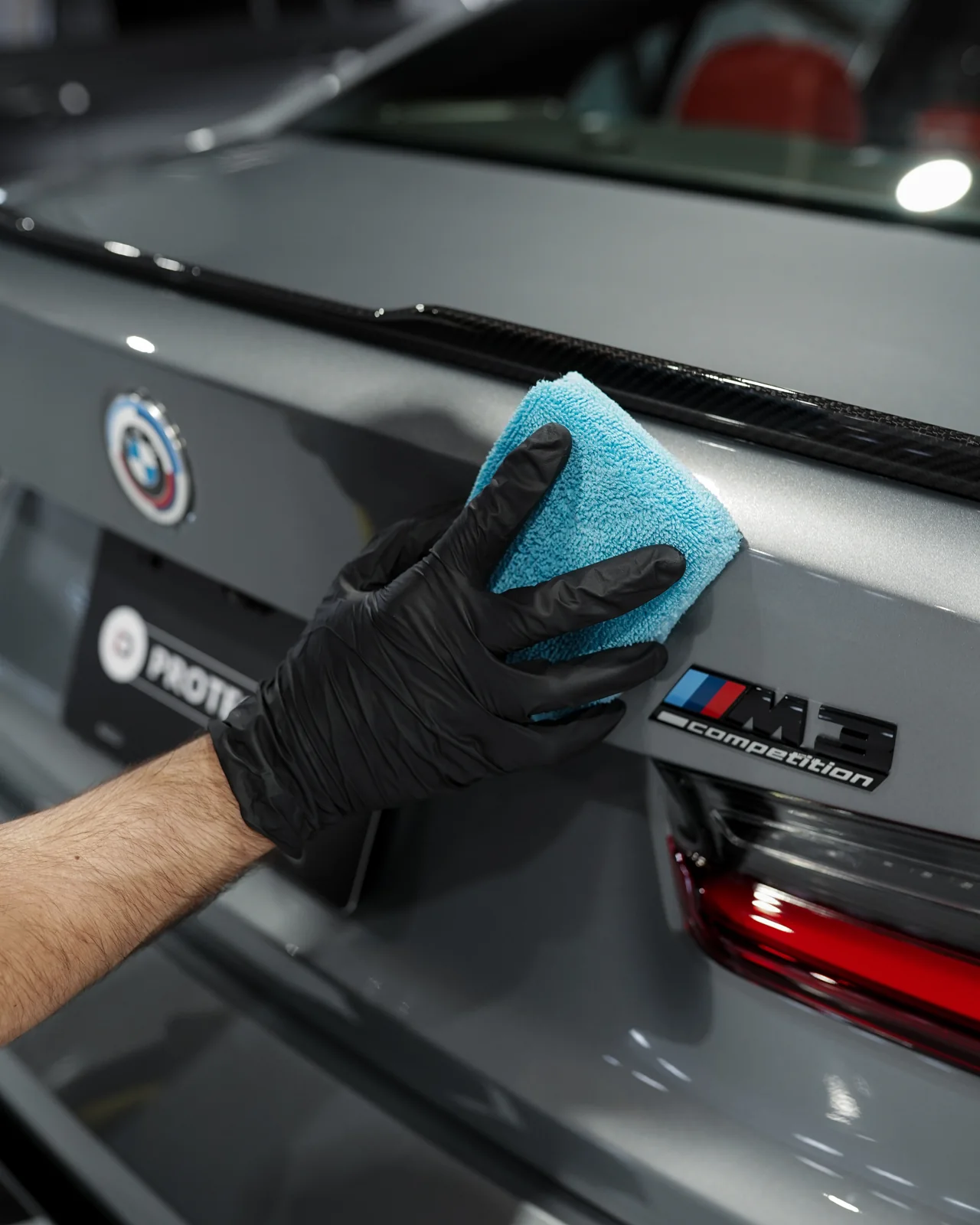
Decontamination, clay, panel wipe, and when a car needs paint correction before film goes on. Film shows every flaw underneath it.
-
03
Film preparation
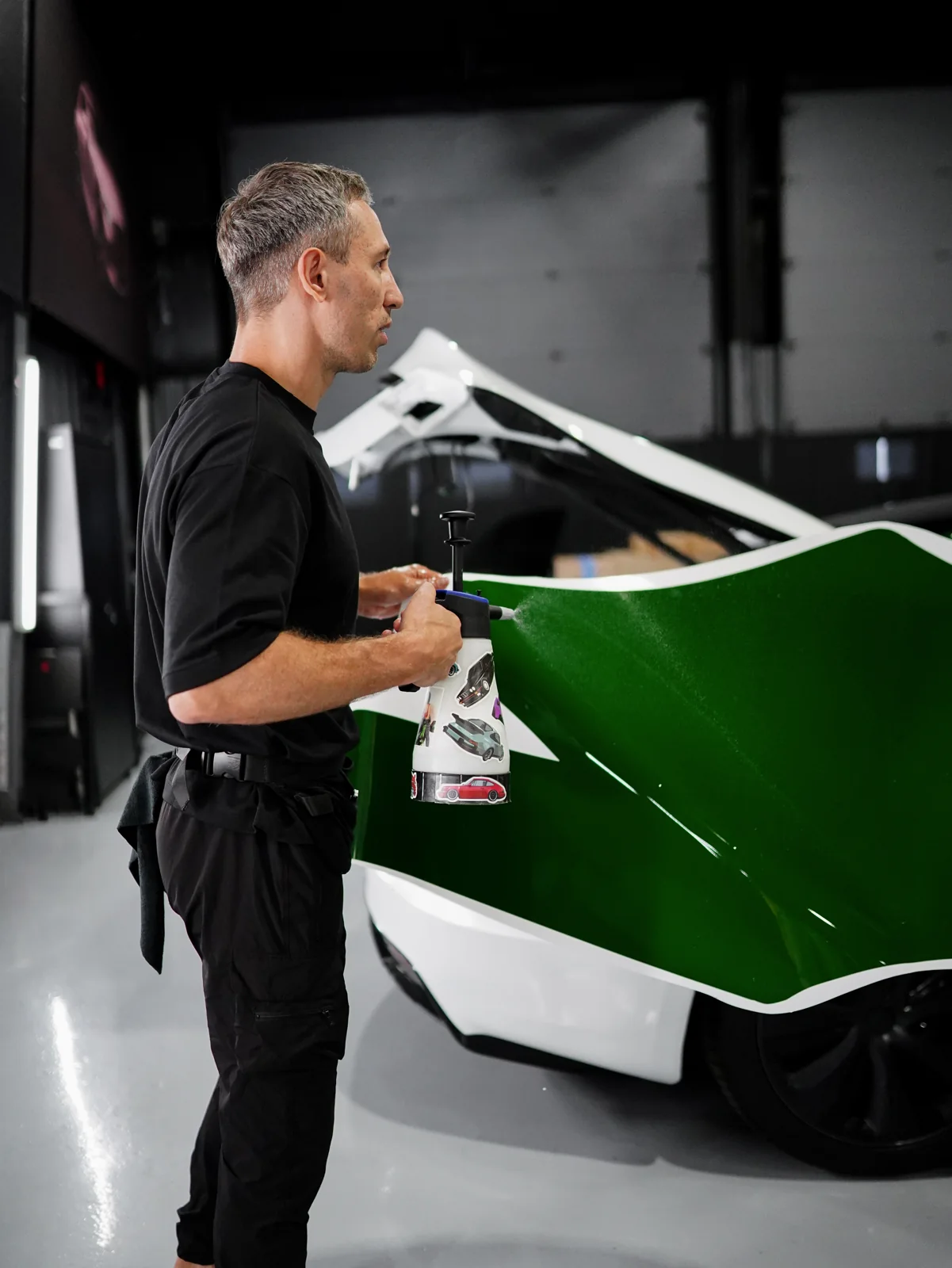
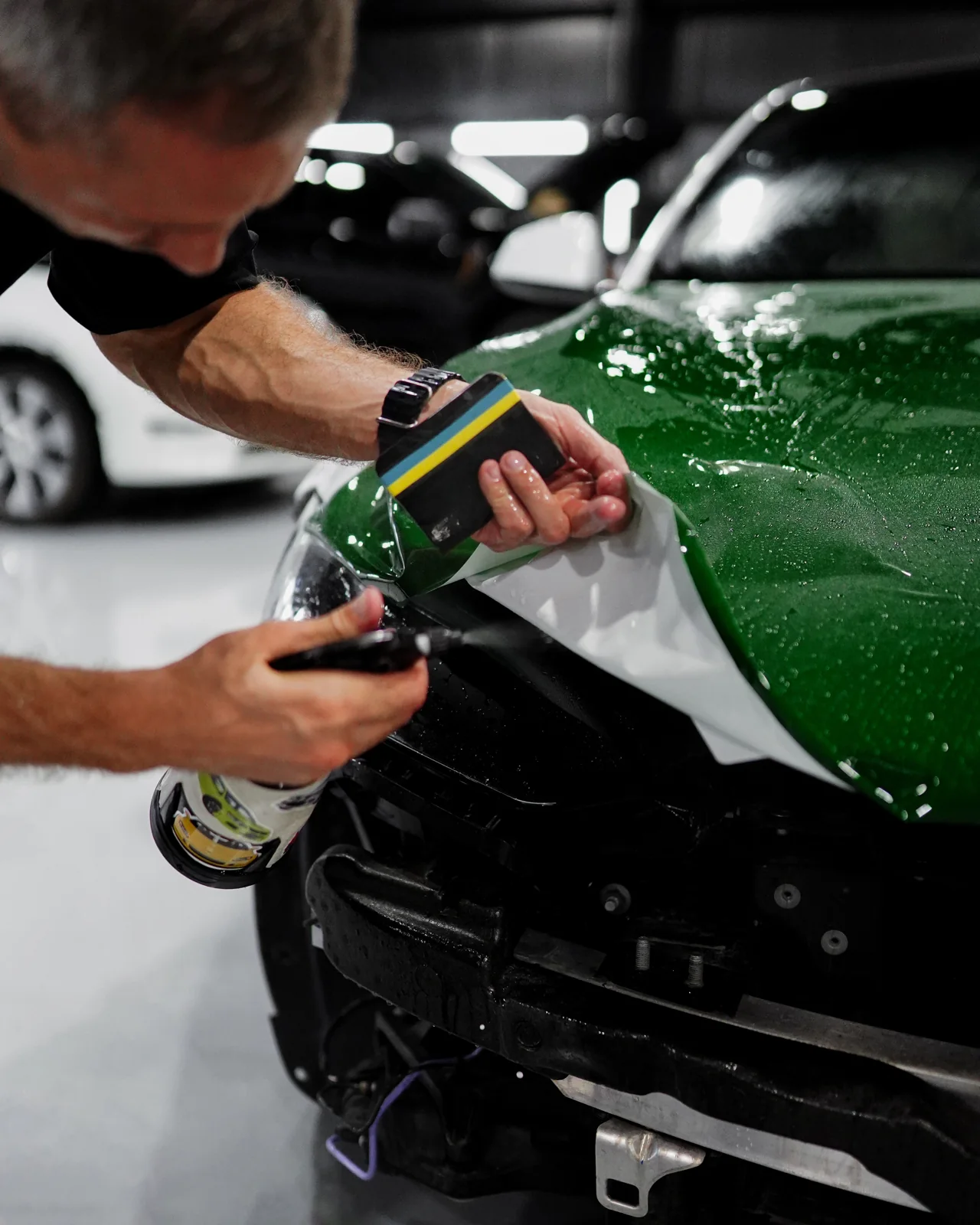
Slip solution and tack solution ratios, handling large sheets without creasing, and keeping a clean working surface.
-
04
Pre-cut and hand-cut techniques
Loading and aligning pre-cut kits, bulk-sheet hand cutting, and the extended pre-cut approach that hides edges without full disassembly.
-
05
Plotter and design software
Running the plotter, pulling patterns, and editing a pattern when the kit does not match the trim on the car in front of you.
-
06
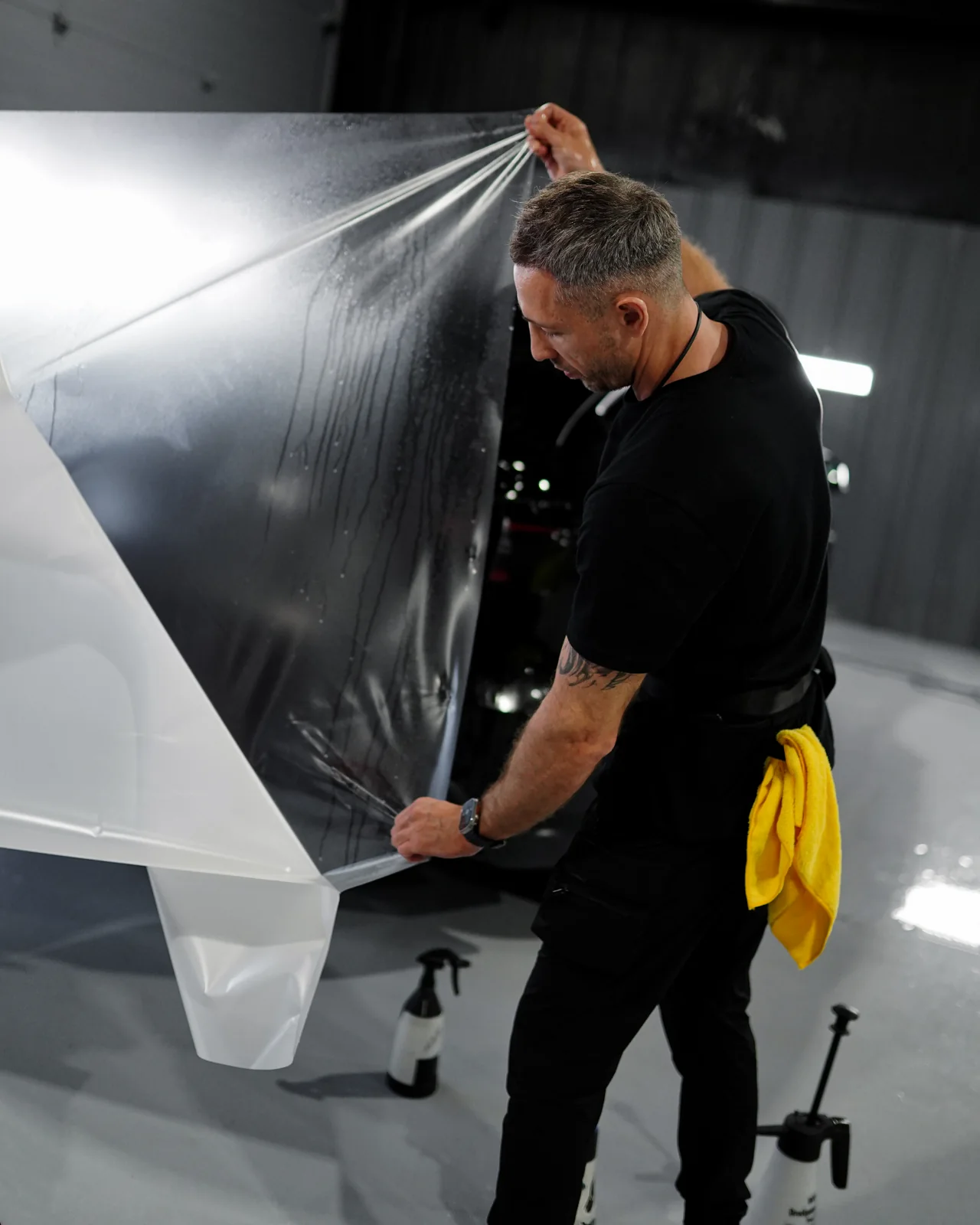
PPF application
The core of any paint protection film training: squeegee pressure, glide, anchoring, stretch control and working out moisture on hoods, bumpers and fenders.
-
07
Trimming and edge wrapping
Cutting on the car safely, wrapping edges, and tucking film inside gaps so the install is invisible.
-
08
Complex panels
Bumpers with sensors, headlights, mirrors, door cups and the rear quarter panels that most new installers avoid.
-
09
Workflow and finishing
Heat setting, final inspection, cleanup, aftercare instructions and the handover conversation with the customer.
What Happens After the Course
Paint protection film training in Toronto should not end when the course does. We stay involved after the last day, because a trainee who cannot find work or cannot land a first customer reflects on the studio that taught them.
Shop referrals. Graduates who want to work for someone first get a list of PPF and wrap shops in the Toronto area that take on new installers, and we encourage them to call every one.
Contractor work. When a graduate is ready to install on their own, we ask them to send us their contractor rates. Our studio takes on overflow installers, and a good trainee is the first person we call.
A six-month check-in. We call our graduates around the six-month mark to ask how the work is going, what panels are giving them trouble and whether they need a refresher day.
Some of the installers in our own bays started as trainees who found this page. People who research PPF training in Toronto, take the course and show up on time are the people we want to hire.
What the training includes.
- Vehicle acceptance: detailed inspection for damages, scratches and chips; proper reporting and administrative procedures.
- Vehicle preparation: washing techniques, chemical/compound cleaning, clay bar application, drying, prepping badges, parts and trims.
- PPF material preparation: hand-cutting and pre-cutting techniques; introduction to plotter and design software.
- PPF application: required temperature and shop conditions; in-depth review of application methods; advanced trimming, tucking-wrapping, working with various films and panels.
- Hands-on experience: apply all lessons under the guidance of a professional PPF installer.
- Practice end-to-end installation, including manual and plotter-guided cutting, on various vehicle parts.
- Apply lessons in real-world scenarios; independently cut materials and expand parts.
- Study the PPF business, choose the right film and communicate with clients.
- Pre-cut and hand-cut installations on hoods, fenders, mirrors, doors, quarters, trunks and bumpers.
- Practice on both dark and light cars to gain experience with different colours.
- Receive a certificate on completion and add the training cars to your portfolio.
Inside the studio
Frequently Asked Questions:
Do I need any experience before taking the course?
No. Both options start from vehicle inspection and acceptance, so a trainee with no film background is fine. Detailers and tinters usually move faster through prep and film handling, but the application steps are new to almost everyone. If you have never held a squeegee, choose personal training so you get more hours on the car.
How is this different from an online PPF course?
We do not teach PPF online. Film behaves differently on a cold bumper than on a warm hood, and you cannot learn stretch control or edge tucking from a screen. Every hour of our Toronto PPF training is spent in the studio on real vehicles, with an installer correcting your hands in the moment.
Which films and tools will I train with?
You train on the same professional-grade films, slip and tack solutions, squeegees, blades and plotter patterns we use on customer cars. The included toolkit is the set we hand our own new installers, so you leave with the tools you learned on, not a starter kit you will replace in a month.
Do I learn hand-cut installation, or only pre-cut?
Both, plus the extended pre-cut method we use on most jobs. Personal training includes two full body applications, which is where you practise disassembly, bulk-sheet cutting and tucking edges inside panels. Group training focuses on a full front, including bumper, hood, fenders, headlights and mirrors.
Can I bring a colleague or staff member?
Yes. Personal PPF training covers up to two people for the one price, which works well for business partners or an owner plus their lead installer. Group training takes up to eight, so a shop can send a whole team.
What support do I get after the course?
Personal training includes six months of direct chat with the installers, and group training includes three months. Both PPF training options include two bonus mentorship days in the Toronto studio that you can book when you have a car of your own to work on. We also call graduates around the six-month mark to see how the work is going.
Will this help me get hired or start my own PPF business?
Yes, and we are direct about both paths. If you want to be hired, you leave with a list of Toronto shops that take on new installers and a working studio that will vouch for the hours you put in. If you want to install on your own, you leave able to quote pre-cut, hand-cut and extended pre-cut jobs, and we take contractor rates from graduates for overflow work.
How do I book a date?
Fill in the form on this page with your name, phone, email and the training type you want, or call the studio. We confirm the next available dates, answer any questions about the course and hold your spot.

Book your spot.
Tell us which course you're interested in and we'll get back to you with available dates.